China Leads Humanoid Robot Race, Outpacing US Innovation
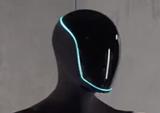
China surges ahead in the race for humanoid robots, outpacing the United States in deployment numbers and innovation speed. A new report highlights how Chinese firms like Unitree Robotics and UBTech are flooding markets with advanced models, while American companies such as Boston Dynamics and Figure AI struggle to scale production.
Unitree's H1 humanoid, priced under $20,000, now handles warehouse tasks with human-like dexterity, thanks to integrated AI from Huawei. UBTech's Walker S series, already in use at Foxconn factories, performs assembly lines with 99% accuracy, reducing errors by half compared to traditional automation.
Founded in 2016, Unitree started as a drone maker but pivoted to legged robots after early successes with their Go1 quadruped. Their focus on affordable, open-source hardware has democratized access, leading to over 10,000 H1 units shipped this year alone.
UBTech, established in 2012 in Shenzhen, began with educational robots before entering industrial applications. Their partnership with Tencent has infused Walker models with cloud-based learning, allowing robots to adapt to new tasks in under an hour.
This boom stems from government subsidies and a vast supply chain. China installed 290,000 industrial robots last year, per the International Federation of Robotics, with humanoids making up 15% of new deployments. The U.S., by contrast, lags at 40,000 installations, hampered by high costs and regulatory hurdles.
Experts warn this gap could reshape global manufacturing. As Chinese humanoids enter homes via models like the $10,000 Optimus-inspired Tiangong from Xiaomi, everyday life might soon feature robotic companions from the East.